Why is the future not on leaders’ minds every day?
Leaders who are alive to the future run high performing organisations.
So, why is futures thinking not a daily ritual in Australian workplaces?
This is the question at the heart of the Hidden in Plain Sight research – a new national study examining how leaders across Australia are engaging with the future.
The study raises our understanding of how leaders navigate an increasingly complex and uncertain future and it invites us to rethink how foresight is used by organisations.
There are two reports from the Hidden in Plain Sight study:
- A free summary report, including key insights and conclusions.
- A full report, featuring key findings, observations and recommendations, plus a model for diagnosing an organisation’s foresight maturity.
The reports make compelling reading for leaders seeking to make sense of uncertainty and change, align strategy with values or strengthen an organisation’s future-facing capabilities.
Access the reports
Full report
$55 (inc. GST)
About the findings
Drawing on a national survey and in-depth interviews with decision-makers, the findings are a wakeup call for leaders and organisations. The world is shifting faster than their institutional rhythms.
While the external environment is shifting at unprecedented speed, many remain anchored to the present – managing risk, meeting compliance and sustaining operations. The findings suggest this short-term focus is actively constraining long-term resilience, confidence and strategic clarity.
The research highlights a clear tension:
- Most leaders agree that engaging with the future matters more now than it did five years ago
- Yet planning horizons continue to shorten, and foresight remains inconsistently embedded in governance and strategy
This disconnect has material consequences: slower decisions, reduced confidence, and organisations that are increasingly reactive rather than prepared for alternative futures.
Rather than pointing to a lack of intent, the study shows that the system itself has become the barrier. The structures, language and capability to look beyond the immediate horizon are missing. Unless this changes, the alternative futures for most organisations will remain hidden in plain sight.
For leaders navigating uncertainty, disruption or declining trust, the full report provides a clear framework for lifting decision-making out of the immediate and back into the strategic.
About the authors
The Hidden in Plain Sight study was developed by a cross-disciplinary team working at the intersection of foresight, leadership, strategy and design.
The research was conducted by:


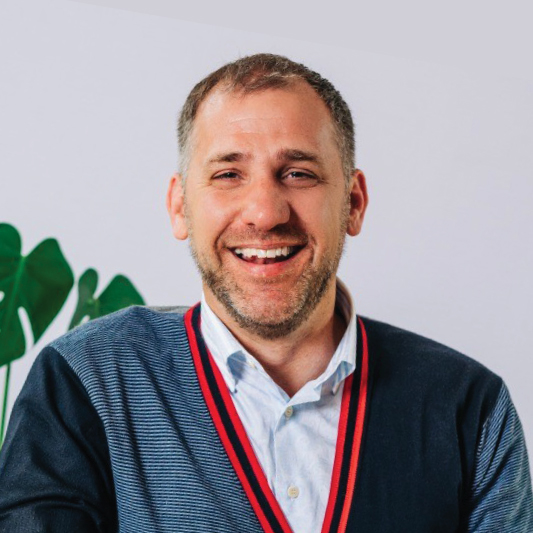
The authors, Dimitri Antonopoulos (Tank), Mark Paterson (Erada Advisory) and Darren Taylor (Taylor & Grace) bring experience from the government, business and community sectors, combining foresight expertise with deep insight into how organisations actually operate under pressure.
In the full report, the authors’ recommendations offer a pathway for leaders to build foresight capability and design organisations that shape the future rather than be overwhelmed by it.

—
Dimitri Antonopoulos
(Tank)

—
Mark Paterson
(Erada Advisory)
—
Darren Taylor
(Taylor & Grace
Download the free summary report
Submit your details to receive the free summary report. The findings from this study point to a growing demand for foresight that is practical, embedded and connected to real decisions, not abstract future-thinking exercises.
Additional resources and offerings emerging from the study will support organisations seeking to embed foresight as a strong and sustained leadership practice.
Get in touch

We acknowledge the Traditional Owners of Country across Australia and recognise their enduring custodianship of land, waters and culture. We pay our respects to Elders past and present, honouring the wisdom, leadership and stories that continue to shape this nation.
We also acknowledge that our work is carried out on the lands of many First Nations communities. We recognise that sovereignty has never been ceded, and that truth-telling and partnership are essential to building a more just future. This report carries forward our commitment to cultural integrity, deep listening and active allyship.